- All
- Product Name
- Product Keyword
- Product Model
- Product Summary
- Product Description
- Multi Field Search


You use a lever block by finding its parts. Check the tool before you use it. Attach the load to the lever block. Use the lever carefully to move things. Lever blocks help you lift, pull, or move heavy things like machines and beams. Many people use this tool for lifting engines or holding cargo. It is also used to move equipment during building work. Always read the manual from the maker before you lift. Follow all safety rules to stay safe. This keeps you and your load safe every time.
Always look at your lever block before you use it. Check the chain, hooks, and brake for damage or wear.
Attach the lever block tightly to a strong support. Make sure the load is balanced. Check that the load is not too heavy for the lever block.
Lift or lower loads with slow, careful movements. Stay away from the path of the load. Never stand under a load that is hanging.
Clean, oil, and store your lever block often. This helps keep it working well and makes it last longer.
Follow safety rules and the instructions from the maker. This helps stop accidents and makes lifting safe and easy.
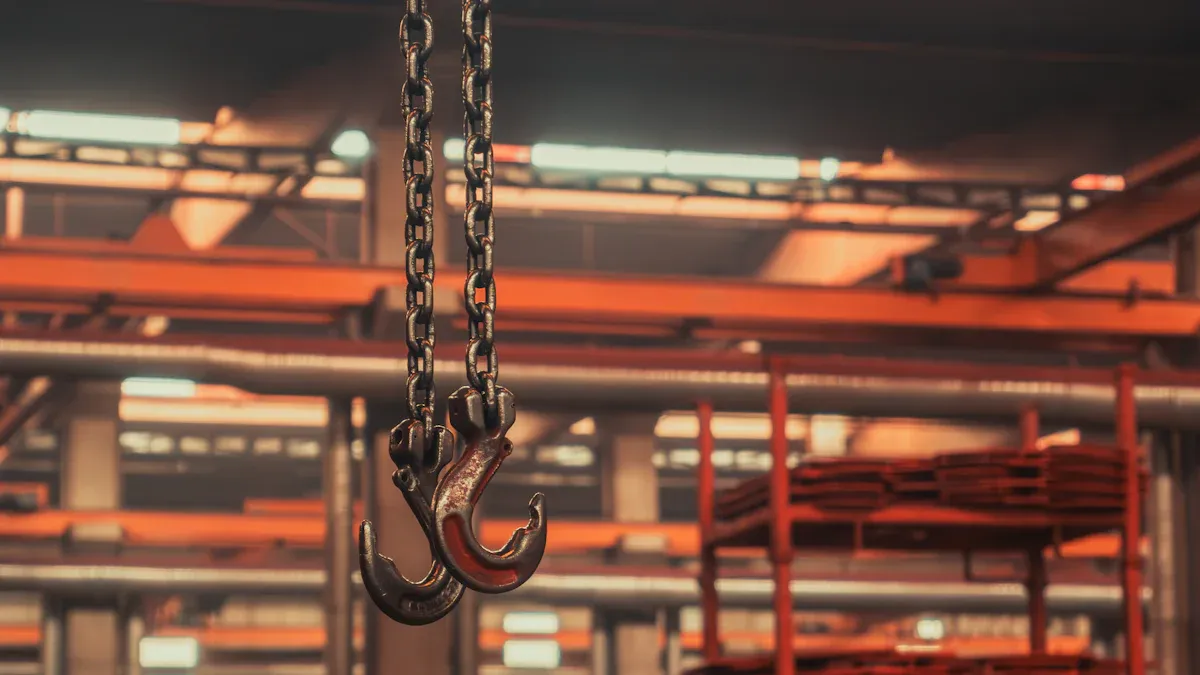
When you use a lever block, you work with a few key parts. Each part does something important and is made from strong materials to keep you safe. Here is a table that lists the main parts and what they are made of:
Component | Typical Material / Description |
|---|---|
Lever Handle | Ergonomic steel with rubber grip; one-piece molding technology; high strength, resistant to deformation |
Load Chain | Grade 80 (G80) T-grade high-strength load chain; made from special heat-treated steel such as 20Mn2; high precision |
Gears | Forged alloy steel with high rigidity and toughness |
Gear Case | Manufactured by multi-stretching process; high strength and good appearance |
Load Hook | Forged and heat treated alloy steel; meets European safety factor 4:1 |
Ratchet and Pawls | Symmetrical double pawl brake system for reliable braking and improved operation efficiency |
Brake System | Mechanical brake; safe, trouble-free, rust-resistant |
All good lever chain hoists have these parts. The lever handle helps you move things up or down. The load chain holds the thing you want to lift. Gears and the gear case help your force move the load. The load hook keeps the item in place. The ratchet and pawls, plus the brake system, make sure everything stays safe and steady.
A lever block works with a simple but strong system. When you push or pull the lever, gears inside turn. The ratchet lets the chain move one way and locks it when you stop. This makes it easier to lift or lower heavy things. The lever and gears give you more power. You can use a lever block to lift things up or pull them sideways. This makes it more useful than a manual chain hoist, which only lifts straight up.
Lever blocks and chain hoists both help you lift things by hand. Lever blocks are great in small spaces or when you need to pull at an angle. Chain hoists, also called hand chain hoists, are better for lifting very heavy things straight up. Both tools are small and easy to carry, so people use them a lot in building, factories, and warehouses.
Tip: Always check the rated capacity before you use any hoist. Make sure it matches the weight of your load and the strength of your support structure.
Here is a chart that shows how much lever blocks cost for different sizes and features:
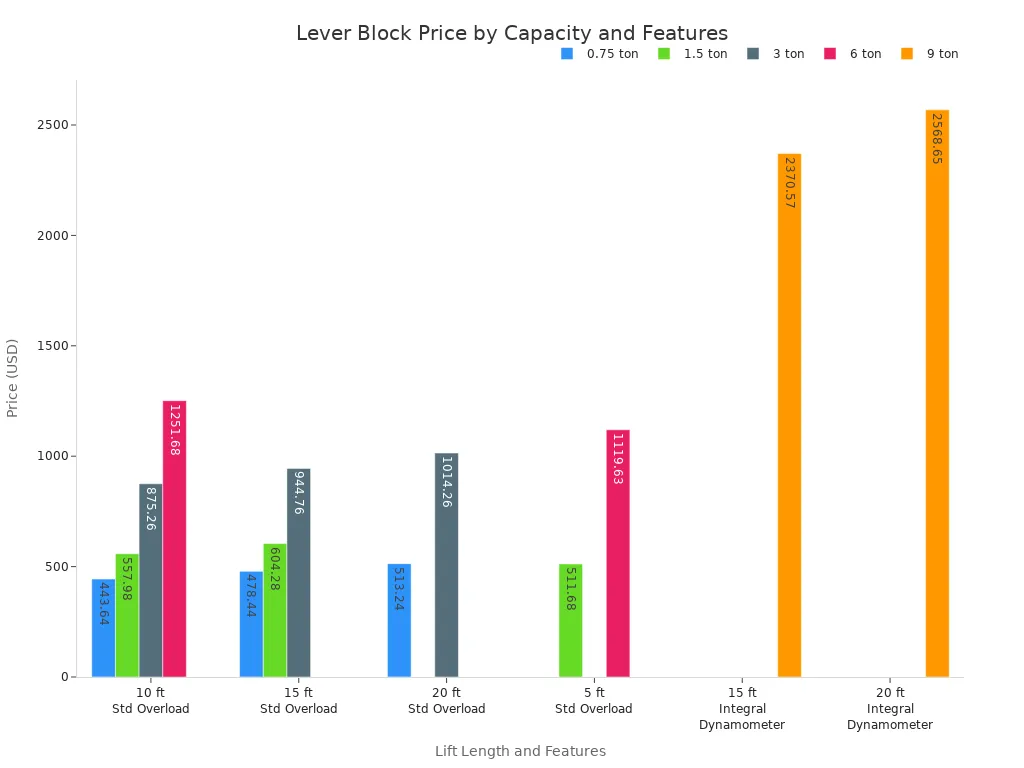
If you want a lever block that works well and is safe, buy one from a trusted company like TOP LIFT. You can also look at other tools like electric hoists and rigging hardware for more ways to lift things.
Before you use a lever chain hoist, you must check it carefully. This step keeps you and your load safe. Start by looking at the hoist and its parts. Make sure the chain, hooks, and safety latches work well. Check the lifting hook for cracks or bends. Look at the load chain for any damage or twists. Move the lever and listen for odd sounds. If you see any problems, do not use the hoist.
You should follow important safety standards. ASME B30.21 and ANSI rules help you know what to check. OSHA also sets rules for safe lifting at work. These standards ask you to inspect the hoist every day before use. You must also keep records of each inspection. Write down the date, your name, and any problems you find. This helps you track the hoist’s condition and keeps your workplace safe.
Here is a simple checklist for your pre-use inspection:
Check the operating mechanism for smooth movement.
Inspect the lifting hook and latch for damage.
Examine the load chain for wear or kinks.
Look at the hoist body for cracks or bends.
Test the brake system by moving the lever with no load.
Make sure all labels are easy to read.
Confirm the hoist matches the rated load capacity for your job.
Tip: Always test the hoist without a load first. This helps you spot problems before you start lifting.
You must attach the hoist to a strong support before lifting. Use a shackle, beam clamp, or trolley that fits the top hook. The support must fit inside the hook and hold the weight without moving. This step prevents side thrust and keeps the hoist stable.
Next, secure the load with the lifting hook. Place the hook in the center of the load’s lifting point. Make sure the safety latch closes fully. The load must hang straight down from the chain hoist. Never twist the chain or let the load swing. Check that the load does not go over the hoist’s load capacity or safety factor.
When you secure the load, double-check the balance. The lifting hook should hold the load steady. If you need to move the load sideways, make sure the hoist and support can handle the direction. For special jobs, you can use other tools like a lifting clamp or an electric hoist from TOP LIFT.
Note: Always use the right hoist for your load. Using the wrong tool can cause accidents or damage.
By following these steps, you set up your lever chain hoist safely. You protect yourself, your team, and your equipment every time you lift.
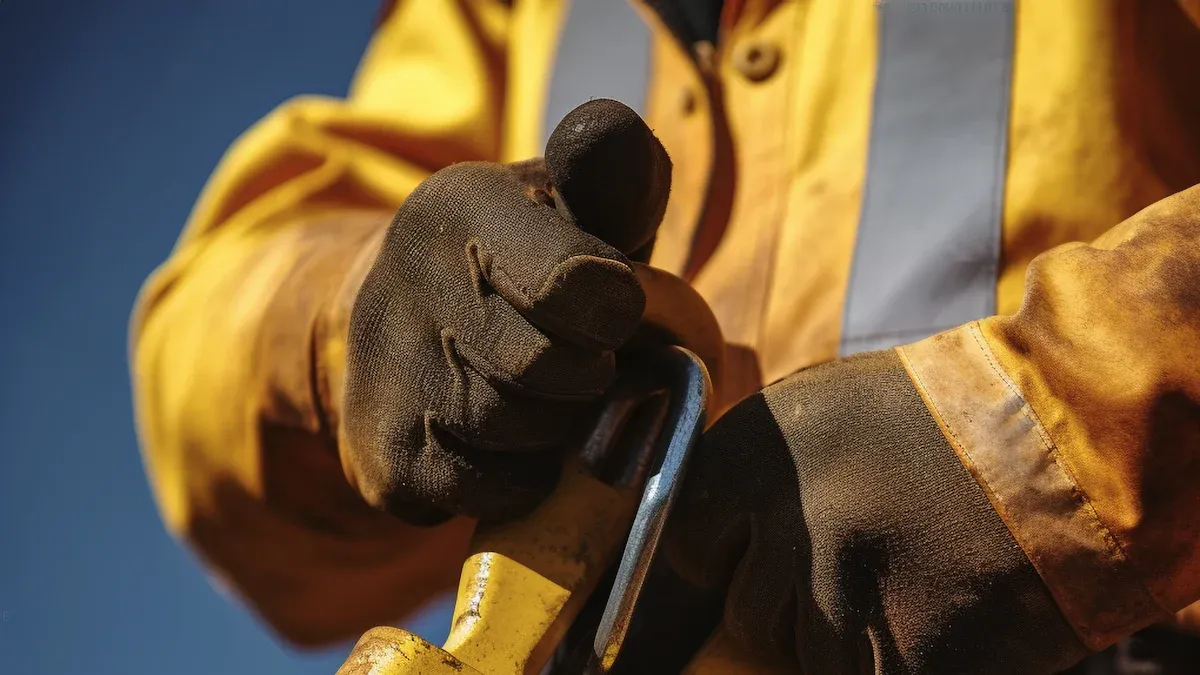
You can use a lever block to lift heavy items safely and efficiently. Start by making sure your lever block is ready for operation. Always check that the load does not exceed the rated capacity. Here is a table showing common rated load capacities for lever blocks used in industrial settings:
Model | Rated Load Capacity | Lift Heights Available | Key Features |
|---|---|---|---|
Elephant YA-100 | 2,200 lbs (1.1 ton) | 5', 10', 15', 20' | Grade 105 galvanized load chain, meets ASME B30.16, load tested to 150% capacity |
Elephant YA-80 | 1,600 lbs | 5', 10', 15', 20' | Grade 105 galvanized load chain, meets ASME B30.16, load tested to 150% capacity |
To begin lifting, follow these steps:
Set the selector lever to the 'UP' position.
Take up any slack in the chain by turning the guide handle clockwise.
Grip the lever handle firmly. Use a steady, controlled motion to pump the lever. Each pump will raise the load a little higher.
Watch the load as it rises. Make sure it stays balanced and does not swing.
Stop lifting if you hear unusual noises or see the chain jam.
Tip: Always keep your hands and feet clear of the load during lifting. Never stand under a suspended load.
Lever blocks work well for both vertical and horizontal lifting. You can use them to move loads up, down, or across a surface. This makes them more flexible than many other manual lifting devices. In tight spaces, you can use a lever block to pull or position equipment with precision.
Lowering a load with a lever block requires careful attention. You must keep control at all times to prevent accidents. Here is how you can lower a load safely:
Make sure the area below the load is clear of people and obstacles.
Set the selector lever to the 'DOWN' position.
Hold the lever handle with a firm grip. Move the lever smoothly and slowly in the lowering direction.
Watch the load as it descends. Keep it steady and avoid sudden movements.
Stop lowering if you notice any problems, such as jerky motion or odd sounds.
Once the load reaches the ground, make sure it is stable before detaching the lifting hook.
Note: Never leave a suspended load unattended. Always lower it to the ground before walking away.
You should always follow safety rules when lowering. Do not exceed the rated load capacity. Inspect the lever block and chain for damage before each operation. If you use your lever block in harsh environments, such as wet or dirty areas, clean and lubricate it regularly to keep it working well.
The freewheeling or neutral function on a lever block helps you adjust the chain quickly. When you set the changeover lever to the neutral position, you can pull the chain freely in either direction. This feature is useful when you need to set the chain length before lifting or lowering a load.
You should only use freewheeling when there is no load or when the load is very light (less than 2% of the working load limit). Never use the neutral position to support a load. Always switch back to 'UP' or 'DOWN' for lifting or lowering.
Tip: Freewheeling saves time during setup. Always double-check that the lever is not in neutral before starting a lifting operation.
Lever blocks give you the flexibility to handle many lifting tasks. You can use them for heavy lifting in construction, factories, or shipyards. They also work well for pulling loads horizontally, such as moving machinery into place. For even more options, you can explore electric hoists or rigging hardware from TOP LIFT.
By following these steps and safety tips, you can make every lifting operation safer and more efficient. Always choose high-quality equipment and inspect it before each use. This will help you avoid accidents and keep your work moving smoothly.
You need to be careful when using a chain hoist. These steps help stop accidents and keep your hoist working well:
Always check the rated load before you start. Never lift more than the limit. This keeps you and the hoist safe.
Look at the chain, hooks, and moving parts before each use. Check for damage, wear, or bent spots.
Make sure the safety latches on the hooks work right. They stop the load from falling off.
Keep your work area clean and dry. Good footing helps you control the hoist and makes lifting safer.
Only trained people should use a chain hoist. Training helps stop mistakes and keeps everyone safe.
Store your hoist in a dry place and oil the moving parts often. This keeps the hoist ready for the next job.
Use the right tool for your job. For special lifts, pick a lifting clamp or electric hoist.
TOP LIFT makes sure every chain hoist meets tough world standards like CE, ASME B30.21, and ISO 9001. Each hoist gets checked by sight, tested with weight, and checked for rust. You get a safe and strong hoist every time you use it.
Remember: Never use a chain hoist to lift people. Always read the manual from the maker to stay safe.
Many people make mistakes that can break the hoist or hurt someone. Here are the most common mistakes and how to avoid them:
Not checking the hoist often. This can hide damage and cause the hoist to break while lifting.
Not following care rules. Bad care makes your hoist wear out faster.
Using chains or hooks that are worn or broken. This makes accidents more likely.
Lifting too much weight. Going over the limit can break the hoist.
Fixing the hoist without the right parts or training. Only use real parts and follow the maker’s rules.
Lifting things over people. This is very dangerous and should never happen.
Turning off safety devices or not following safety steps. This puts everyone in danger.
If you follow these tips, you help make lifting safe every time.
Lever blocks are used in tough places. Sometimes, you may have problems when using them. Here are some issues you might see:
Chain wear or damage: Chains that are stretched, bent, or rusty are not safe to use.
Stuck or hard-to-move lever: If the handle is hard to move, it might be dirty, dry, or rusty inside.
Erratic chain movement: The chain can jump or get stuck if it is put on wrong or if the brake pawl or ratchet teeth are worn out.
Brake dragging: If the brake is dirty or worn, the handle will be hard to move.
Frame cracks or hook deformation: Lifting too much, pulling sideways, or dropping the hoist can break the frame or bend the hooks.
Hoist will not freewheel: If you use the hoist wrong or put the hand wheel on wrong, it may not freewheel.
Tip: Never use a cheater bar or pull sideways. These actions can break the lever block or damage the hooks and chains.
If your lever or chain gets stuck, do these steps:
Read the operation manual for help.
Get the right tools and any new parts you need.
Take apart the problem area and look for dirt, damage, or worn parts.
Clean all the pieces and change any that are bad.
Put oil on moving parts before putting it back together.
Try the lever block with no load, then with a light load.
Write down what you fixed and watch the hoist after you use it again.
Taking care of your lever block keeps it safe and working well. Use these tips:
Inspect before each use: Look for cracks, worn chains, or broken hooks.
Clean and lubricate: Wipe off dirt and put oil on the chains and gears to stop rust.
Store properly: Keep your lever block in a dry, clean place. Cover it if you need to.
Check chain alignment: Make sure the chain goes straight from the load to the anchor.
Follow load limits: Never lift more than the rated capacity. This keeps the gears and chains safe.
Keep records: Write down checks, repairs, and care for safety.
Schedule professional inspections: Have a trained person check your lever block at least once a year.
Note: Rules like ASME B30.21 and OSHA say you must check and write down inspections. Good training helps you find problems early.
If you follow these steps, your lever block will last longer and break less. For more ways to lift, look at TOP LIFT’s lifting clamps and electric hoists. Good tools and care keep your work safe and running well.
To use a lever block safely and effectively, follow these steps:
Inspect your lever block before each use. Check the chain, hooks, and brake for damage.
Attach the lever block to a strong anchor point. Make sure the load is secure.
Stand clear of the load path. Never stand under a suspended load.
Lift or lower the load steadily. Keep control and watch for swinging.
Store your lever block in a dry place after use.
Regular inspection and safe operation protect you and your load. Choose certified products from TOP LIFT for reliable lifting, pulling, and moving. With practice, you will master every load and handle any lifting challenge with confidence.
You should inspect your lever block before every use. Look for damage, worn chains, or bent hooks. Regular checks help you spot problems early and keep your lifting jobs safe.
Yes, you can use a lever block for both lifting and pulling. It works well for moving heavy loads up, down, or sideways. For special tasks, you might also use a lifting clamp or webbing sling.
A lever block works by hand and suits smaller jobs or places without power. An electric chain hoist uses electricity to lift heavier loads faster. Choose the right tool for your job and work area.
Store your lever block in a dry, clean place. Hang it up or keep it in a toolbox. Wipe off dirt and oil the moving parts. Good storage keeps your tool ready for the next job.
Stop using the lever block right away. Check for twisted or damaged chain links. Clean and oil the chain if needed. If you cannot fix the problem, ask a trained technician for help.