- All
- Product Name
- Product Keyword
- Product Model
- Product Summary
- Product Description
- Multi Field Search
Views: 0 Author: Site Editor Publish Time: 2025-08-11 Origin: Site


If you need to lift heavy objects often, electric chain hoists work best for speed and power. For lighter or occasional lifting, manual chain hoists offer control and simplicity. Choosing the right chain hoist keeps your work safe, efficient, and cost-effective. A chain hoist is a device that uses a chain and pulley system to raise or lower loads with ease. Electric models use motors to lift quickly, while manual types rely on your strength and effort. You can compare both to decide which one fits your job.
Electric chain hoists are great for lifting heavy things. They work fast and save energy. This makes them good for busy places like factories. They are also used at construction sites.
Manual chain hoists are easy to carry and simple to use. They are best for lifting lighter things. They work well when you do not have power. They are good for lifting things sometimes.
Think about how much weight you need to lift. Also, think about how often you will use the hoist. Electric hoists can lift heavier things. Manual hoists are better for lighter jobs.
Safety is very important. Electric hoists have special safety systems. Manual hoists use a strong and simple design for safety.
Look at your budget and how much care the hoist needs. Electric hoists cost more at first. They need less fixing over time. Manual hoists cost less at first. They may need more repairs later.
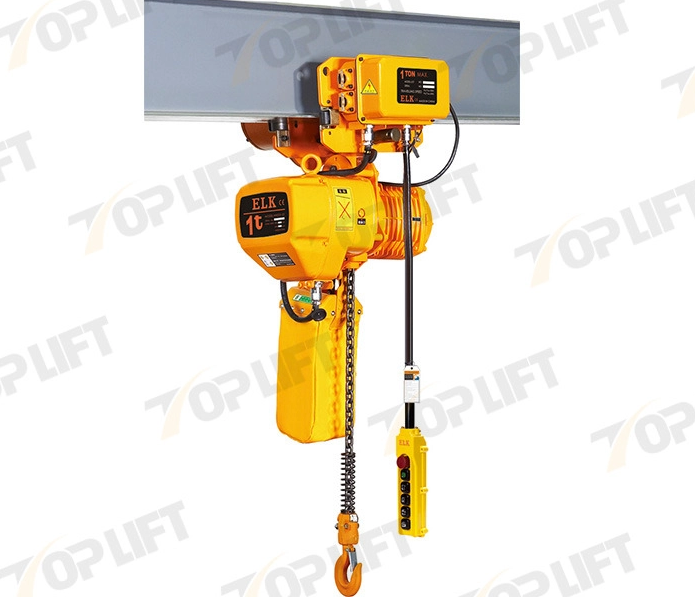
When picking a chain hoist, you should know how each type works. Electric and manual models have different features. Using the right chain hoist makes lifting safer and easier. TOP LIFT sells many kinds of chain hoists. These include electric hoists, manual chain hoists, and lever hoists. You can find products for light or heavy jobs.
Electric chain hoists use a motor to lift things up and down. You control them with a handle or remote. This makes lifting fast and smooth. Electric chain hoists are good for heavy loads and lots of lifting. They work well in factories, warehouses, and building sites. You need steady power for electric chain hoists. The design is more complicated than manual ones. But you get more speed and better efficiency.
Tip: If you lift heavy things many times a day, electric chain hoists help you save time and energy.
TOP LIFT’s electric chain hoists can lift from 0.125 tons (250 pounds) to over 50 tons (100,000 pounds). Some can lift even more. You can pick electric hoists for big projects or tough jobs. TOP LIFT makes sure every electric chain hoist meets strict safety rules like CE and ANSI.
Manual chain hoists use your strength to lift things. You pull a hand chain to move the load up or down. This simple design does not need electricity. You can use manual chain hoists where there is no power. These hoists are easy to carry and set up. Manual chain hoists are best for lighter loads and sometimes lifting. You can use them in workshops, garages, and outside.
TOP LIFT’s manual chain hoists can lift from 0.5 tons (1,000 pounds) to 20 tons (40,000 pounds). You can find hand chain hoists and lever hoists for different jobs. TOP LIFT’s chain hoists follow safety rules and work well.
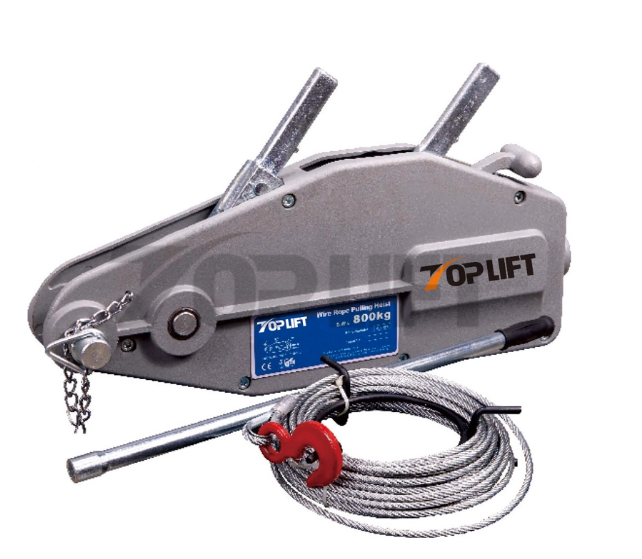
Here is a table that shows the main differences between electric and manual chain hoists:
Feature | Manual Chain Hoist | Electric Chain Hoist |
|---|---|---|
Operation | Human-powered, using a hand chain | Motor-driven, using a control handle or remote |
Load Capacity | 0.5 to 20 tons | 0.125 to 50+ tons (some up to 100 tons) |
Speed | Slower, depends on human effort | Faster, allows for efficient lifting |
Design | Simple, portable, no power source needed | More complex, requires stable power supply |
Applications | Lighter loads, infrequent use | Heavy lifting, frequent use |
You can visit TOP LIFT’s chain hoists product page to see all the models. You will find electric hoists, manual chain hoists, and lever hoists for every job.
Note: TOP LIFT’s chain hoists are used by people in over 25 countries. You get good quality, safety, and expert help with every product.
Electric chain hoists help you move heavy things fast. They use a motor to lift and lower items with a button. You can finish lifting jobs much quicker than with manual hoists. In busy places like factories, speed is important. Electric hoists let you do the same task over and over without waiting. This saves time and makes work easier for people.
Electric chain hoists work faster than manual ones. This helps workers get more done in factories and shops.
These hoists do the lifting for you again and again. Workers can do other jobs instead of using their strength to lift.
Electric chain hoists make work safer and more efficient. They give strong lifting power for big jobs and lots of use.
If you need to lift big things up and down many times a day, electric chain hoists help you work smoothly. You can trust them to lift with control and steady power. They are great for assembly lines, building sites, and places where speed matters.
Note: Electric chain hoists from TOP LIFT follow strict safety rules. You can count on them for safe lifting in tough places.
Manual chain hoists are good for lighter loads and sometimes lifting. You pull a hand chain to lift things up or down. This lets you control how fast and how far you move the load. Manual chain hoists do not need electricity, so you can use them anywhere.
Manual chain hoists are easy to carry and set up. You can use them in workshops, garages, or outside. These hoists are best for jobs that do not need fast or constant lifting. If you only lift things once in a while, manual chain hoists or lever hoists work well.
Manual chain hoists let you lift safely at your own speed.
They are easy to use and take care of.
Lever hoists help with different lifting jobs, even in small spaces.
You can trust manual chain hoists for control and steady lifting in smaller jobs. They are a smart choice for many lifting needs and save money.
When you choose a chain hoist for lifting heavy loads, you need to look at the load capacity, also called working load limits or wll. Electric chain hoists give you a wide range of lifting power. You can use them for light-duty jobs or for high vertical loads in big factories. The load capacity of an electric chain hoist can start as low as 0.125 tons and go up to over 50 tons for special heavy lifts. This makes electric chain hoists a top choice for many types of lifting equipment.
Here is a table that shows common load capacities for electric chain hoists and their typical uses:
Capacity Range | Application Description |
|---|---|
0.125 tons | Light-duty tasks |
1 ton | Small components, toolboxes |
2 tons | Balance between light and medium-duty |
3 tons | Medium to heavy loads in industrial environments |
4 tons | Demanding operations in mid-sized plants |
5 tons | Heavy equipment maintenance and construction |
10 tons or more | Heavy manufacturing and construction tasks |
Over 50 tons | Specialized heavy-duty applications |
You can see that electric chain hoists handle a wide range of wll. If you work in a place where you need to lift big machines or materials often, an electric chain hoist gives you the power and safety you need. You can trust these chain hoists for both small and large jobs.
Manual chain hoists also have strong load capacity, but they work best for lighter or less frequent jobs. You use your own strength to operate a manual chain hoist or a lever hoist. Most manual chain hoists have a wll between 0.5 and 20 tons. Some models can handle up to 20 tons, but most jobs use 5 tons or less.
Manual chain hoists usually handle loads from 0.5 to 20 tons.
You can use a lever hoist for jobs that need control in tight spaces.
Manual chain hoists are good for infrequent lifting jobs and smaller loads.
You can use a lever hoist when you need to move or position loads by hand.
Manual chain hoists are easy to carry and set up for quick jobs.
If you need to move heavy loads sometimes, a manual chain hoist or lever hoist is a smart choice. You get reliable wll and safe lifting for many tasks. For bigger or more frequent jobs, you may want to use an electric chain hoist for higher load capacity.
Note: Always check the wll before you use any chain hoist or lever hoist. This keeps your lifting equipment safe and helps you avoid accidents.
When you look at electric chain hoists, you notice that the initial price is higher than manual models. Most electric chain hoists cost between $4,743.95 and $7,180.00. This price covers the advanced motor, control system, and safety features. You pay more at first, but you get faster lifting and less physical effort. Over time, you also save on repairs because electric hoists need less frequent maintenance.
You can see the cost comparison below:
Type | Average Cost Range |
|---|---|
Manual Chain Hoists | Not specified in detail |
Electric Chain Hoists | $4,743.95 to $7,180.00 |
Electric chain hoists also come with a warranty, usually between 1 and 2 years. This warranty covers the motor and main parts. You get peace of mind knowing your equipment is protected. You also spend less on repairs because electric hoists break down less often.
Tip: If you use your chain hoist every day or for heavy loads, the higher price of electric hoists can save you money in the long run.
Manual chain hoists have a lower starting price. You do not need to pay for a motor or electrical parts. This makes them a good choice if you have a small budget or only need to lift things sometimes. Manual chain hoists do not have a detailed average price listed, but they usually cost much less than electric models.
However, you may need to repair or replace parts more often. Manual chain hoists require more frequent maintenance, which can add to your costs over five years. The table below shows how costs compare over time:
Hoist Type | Initial Costs | Maintenance Frequency | Repair Costs | Long-term Costs |
|---|---|---|---|---|
Manual Hoist | Lower | More frequent | Lower | Higher due to part replacements |
Electric Hoist | Higher | Less frequent | Higher | Lower due to fewer repairs required |
Manual chain hoists often come with longer warranties, sometimes up to 10 years. This longer coverage helps protect your investment. You can see the warranty comparison here:
Type of Hoist | Warranty Period |
|---|---|
Electric Chain Hoists | 1 to 2 years |
Manual Chain Hoists | Up to 10 years |
You should think about how often you will use your chain hoist and how much you want to spend over time. If you need a tool for daily, heavy lifting, an electric chain hoist may be worth the higher price. If you only lift things now and then, a manual chain hoist can save you money at the start.
You may wonder if electric chain hoists are easy to move and set up. Many electric models have a compact structure. This design lets you use them in tight spaces, such as small workshops or crowded job sites. The small size also helps you install them quickly, even when space is limited.
You will find that the lightweight build of many electric chain hoists makes them easier to handle than you might expect. You can transport them from one location to another without much trouble. This feature is helpful if you need to lift loads in different places during the day.
Compact structure fits in small spaces.
Small size improves maneuverability.
Lightweight design allows for easy transport and quick setup.
Tip: If you often work in different locations or need to move your lifting equipment, electric chain hoists with a portable design can save you time and effort.
Some electric chain hoists also come with handles or wheels. These features make it even easier for you to move them around your work area.
Manual chain hoists are known for their portability. You can carry them by hand to almost any job site. The simple design means you do not need a power source. You can use them indoors or outdoors, even in places where electricity is not available.
You will notice that manual chain hoists are usually lighter than electric models. You can hang them from a beam, a tripod, or other support structures. This flexibility lets you set up your lifting system wherever you need it.
Easy to carry by hand.
No need for electricity or batteries.
Quick to set up in many locations.
Note: Manual chain hoists are a great choice if you need a portable lifting tool for occasional jobs or remote sites.
You can rely on manual chain hoists when you need to move equipment often or work in areas without power.
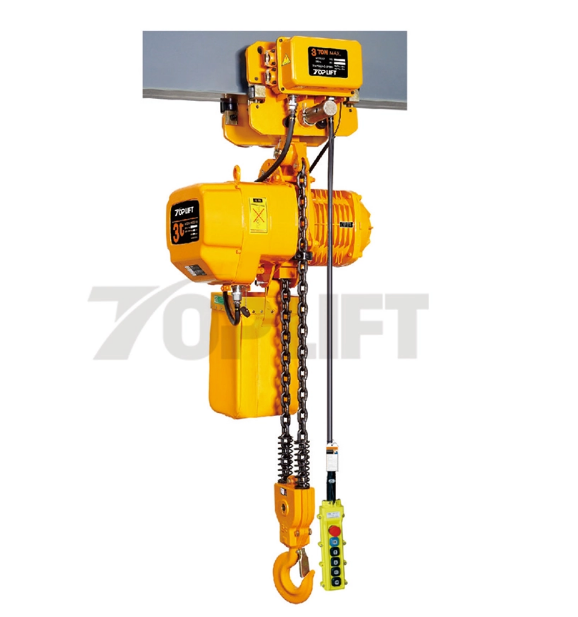
You need to keep your workplace safe when lifting heavy things. Electric chain hoists from TOP LIFT have special safety features to protect you and your team. Each electric model uses an ergonomic pendant. This lets you adjust the hoist easily without lifting by hand. It helps lower strain and gives you better control of the load.
TOP LIFT makes electric chain hoists that follow strict rules like CE and ANSI. These rules mean the products pass hard safety tests. You can trust the safety features built into each hoist. They include overload protection and emergency stop buttons. These features help stop accidents and keep your lifting safe.
Here is a table that shows common safety features in chain hoists:
Type of Hoist | Safety Features |
|---|---|
Electric Chain Hoist | Ergonomic pendant, overload protection, emergency stop, CE/ANSI compliance |
Note: TOP LIFT’s electric chain hoists work in factories, warehouses, and building sites. You get strong safety and good quality every time you use them.
Manual chain hoists also have good safety features. You use a strong and simple design that works in tough lifting jobs. TOP LIFT makes manual chain hoists with high-quality materials. Each hoist is tested to meet CE and ANSI rules. You can trust these hoists for safe lifting, even in hard places.
Manual chain hoists come in many sizes, from 1/4 ton to 20 tons. You get lots of choices for different jobs. The simple design has fewer moving parts. This lowers the chance of something breaking. You can set up manual chain hoists fast and use them safely in workshops, garages, or outside.
Strong build for tough jobs
Many sizes for different tasks
Certified to meet safety rules
Tip: Always check the safety features before you use any chain hoist. TOP LIFT checks every product to make sure it meets high safety standards.
You must take care of electric chain hoists. This keeps lifting safe and reliable. Regular checks help stop sudden problems. Your equipment works better when you look after it. Check the hoist often for damage or wear. Put oil on moving parts to stop rust and friction. Clean the chain and case to get rid of dust. Always follow the maker’s instructions for service. This helps you avoid breakdowns and expensive fixes.
Look at the chain and hooks for cracks or bends.
Oil the gears and chains so they move well.
Clean the hoist after each use to remove dirt.
Test the controls and safety features often.
Change worn parts before they break.
Electric chain hoists last over 10 years with good care. Some can do up to 2 million lifts before replacement. Regular service makes them safer and more reliable. Your hoist will work well for years if you follow these steps.
Tip: Maintenance helps your hoist work better and last longer. You lower accident risks and keep your workplace safe.
Manual chain hoists need care to stay safe and last long. Check the hand chain and lifting parts before each use. Look for wear, rust, or damage. Oil the chain and gears so lifting is easier. Clean the hoist to stop rust from dirt and water.
Check the hand chain for kinks or broken links.
Oil moving parts so they work smoothly.
Clean the hoist after use to stop rust.
Look at hooks and latches to make sure they work.
Replace damaged parts right away.
Regular care stops sudden problems. Your manual chain hoist stays safe and works well for many jobs. Good care helps your equipment last longer.
Note: Regular care is important for safe and long use of chain hoists. You protect your tools and keep lifting jobs running well.
You can use an electric chain hoist in many jobs. This tool helps you lift heavy things fast and safely. In factories, you move materials and load or unload products. You also use them to change molds on the line. On building sites, electric chain hoists lift steel beams and concrete blocks. They also help with formwork. In mining, workers use them to move equipment and ore. These hoists work even in rough places. Shipyards use electric chain hoists to lift ship parts and put in equipment. This makes building and fixing ships faster. Warehouses and transport centers use these hoists to move heavy goods and containers. This helps with moving things from place to place.
Industry | Application Description |
|---|---|
Manufacturing | Material handling, assembly, loading/unloading, mold replacement |
Construction | Lifting steel, formwork, concrete blocks |
Mining | Equipment overhaul, ore loading/unloading |
Shipbuilding | Lifting ship components, equipment installation |
Transportation & Warehousing | Handling heavy goods, containers, flexible logistics scenarios |
TOP LIFT’s electric chain hoists work well in all these places. You get strong lifting power and safety features that meet world rules. You can use these hoists near the ocean or on ships. The special finish and nickel-plated parts stop rust. This helps your hoist last longer in salty air.
You may pick a manual chain hoist when there is no electricity or you need more control. Manual chain hoists are good in places where sparks are dangerous. You can use them in far-away places, outside, or in shops without power. Manual chain hoists let you lift things carefully and put them in the right spot.
Environment Type | Reason for Preference |
|---|---|
Risk of Spark | No spark risk, safe for explosive areas |
No Electrical Power or Air Supply | Operates without power, versatile for remote sites |
Explosive or Volatile Areas | Spark-resistant, designed for dangerous settings |
Precision Lifting | Allows controlled, precise lowering of loads |
TOP LIFT’s manual chain hoists work in many places. You can use them for marine and offshore jobs. The tough finish and rust-proof parts help your hoist last in hard weather. You get safe and steady lifting for factory, building, and marine work.
Tip: Pick the right chain hoist for your job. TOP LIFT has products for many kinds of work and places.
When you select a chain hoist, you need to look at several important factors. Each job has different needs, so you must match the hoist to your work. Here are the main points you should think about:
Load Capacity
Check the maximum weight you need to lift. Electric hoists handle heavier loads with ease. Manual hoists work best for lighter weights.
Frequency of Use
Think about how often you will use the hoist. Electric hoists suit frequent, daily lifting. Manual hoists fit occasional or light-duty tasks.
Lifting Speed
Decide if you need to lift items quickly. Electric hoists move loads faster and boost productivity. Manual hoists lift slower but give you more control.
Power Availability
Make sure you have a reliable power source for electric hoists. Manual hoists do not need electricity, so you can use them anywhere.
Portability and Weight
Manual hoists are lighter and easier to carry. You can move them from site to site with little effort.
Safety Features
Electric hoists often come with advanced safety systems, such as overload protection and emergency stops. Manual hoists have basic but reliable safety features.
Maintenance Requirements
Manual hoists have a simple design and need less maintenance. Electric hoists require more care and regular checks.
Budget
Manual hoists cost less to buy and maintain. Electric hoists have a higher price but can save you money over time by reducing labor costs and increasing efficiency.
Tip: Always check the environment where you will use the hoist. Moisture, dust, extreme temperatures, and chemicals can affect performance. For example, moisture may cause corrosion or short-circuiting in electric hoists if they are not sealed. Dust can clog vents and wear down parts. Extreme cold may need special lubricants, while heat can shorten the life of electrical parts. Chemicals may damage both types if not protected.
Environmental Condition | Impact on Performance |
|---|---|
Moisture | Risk of corrosion or short-circuiting if not sealed |
Dust | Can clog vents and wear down components |
Extreme Temperatures | Cold may require special lubricants; heat can reduce lifespan of electrical parts |
Chemical Exposure | Can affect safety and performance if not properly protected |
You should also avoid common mistakes when choosing a hoist:
Buying a hoist with the wrong voltage for your power supply.
Selecting the wrong lift height or reach.
Choosing a trolley that does not fit your beam size.
You want to pick the right hoist for your job. Here is a simple step-by-step guide to help you choose:
Determine the Load Capacity Needed
Find out the heaviest item you need to lift. Choose a hoist that can handle this weight safely.
Check How Often You Will Use the Hoist
If you lift items many times a day, pick an electric hoist. For occasional lifting, a manual hoist works well.
Decide on Lifting Speed
If you need to move items quickly, go with an electric hoist. For slow, careful lifting, a manual hoist is better.
Review Power Supply Options
Make sure you have the right power for an electric hoist. If you do not have power, use a manual hoist.
Consider the Work Environment
Look at the area where you will use the hoist. If you work in wet, dusty, or chemical-heavy places, choose a hoist with the right protection.
Measure Space and Headroom
Check the space where you will install the hoist. Make sure the hoist fits and can move freely.
Select the Right Suspension and Trolley
Pick a suspension type and trolley that match your beam size and layout.
Think About Safety and Maintenance
Choose a hoist with safety features that match your needs. Plan for regular checks and care.
Set Your Budget
Decide how much you want to spend now and in the future. Remember, electric hoists cost more at first but can save money over time.
Ask for Expert Help if Needed
If you are not sure, talk to a lifting equipment expert. They can help you find the best hoist for your job.
Note: Electric chain hoists work best for heavy, frequent lifting. Manual hoists are great for light, occasional jobs or places without power.
How to Choose the Right Chain Hoist: Step-by-Step
Identify the maximum load you need to lift.
Decide how often you will use the hoist.
Choose the lifting speed you need.
Check if you have a power supply.
Assess your work environment for moisture, dust, or chemicals.
Measure your available space and headroom.
Select the right suspension and trolley.
Review safety features and maintenance needs.
Set your budget.
Consult with a professional if you have questions.
Ready to find the perfect hoist? Explore the full range of chain hoists at TOP LIFT or reach out for a custom recommendation.
You have learned how electric and manual chain hoists are different. Electric chain hoists can lift heavier things and do it faster. Manual chain hoists are easier to move and cost less money. Before picking one, look at how far you need to lift things. Make sure you know how much weight you will lift. Think about what kind of suspension you need. Also, remember to think about how much work you have, where you will use the hoist, and how much money you can spend. Here is a simple checklist to help you decide:
Check how far you need to lift.
Make sure the hoist can lift your load.
Pick the right suspension for your job.
Pick the hoist that fits your needs so you can lift things safely and easily.
Electric chain hoists use a motor to lift loads quickly. Manual chain hoists rely on your strength to move the load. You choose electric for speed and heavy lifting. You pick manual for simple, portable jobs.
You should check the weight you need to lift, how often you will use the hoist, and if you have power available. Electric hoists work best for heavy, frequent lifting. Manual hoists suit lighter, occasional tasks.
Yes, chain hoists are safe when you follow the instructions. Always check the load limit and inspect the hoist before use. TOP LIFT products meet safety standards like CE and ANSI.
You should inspect your hoist before each use. Clean and oil moving parts regularly. Replace worn or damaged parts right away. Regular care keeps your hoist safe and working well.
Yes, you can use chain hoists outdoors. Make sure you protect them from rain and dirt. Choose a model with rust-resistant parts for longer life in outdoor conditions.