- All
- Product Name
- Product Keyword
- Product Model
- Product Summary
- Product Description
- Multi Field Search
Views: 0 Author: Site Editor Publish Time: 2025-09-22 Origin: Site


The handling of heavy materials has always been a challenge for human beings, and in the industrial world, this challenge has grown in both scale and complexity. Construction sites, factories, ports, and mines all require reliable equipment to lift and move materials that are far beyond human strength. Among the most trusted solutions is the lifting hoist, a device specifically designed to raise and lower loads with safety, control, and efficiency. Lifting hoists are not only about strength but also about precision and reliability, which makes them indispensable in operations where safety and productivity are equally important.
This guide takes a closer look at lifting hoists by examining the different types available, the way they function, and the wide variety of uses they serve across industries. It also explains the considerations that must be kept in mind when selecting a hoist and discusses how this equipment continues to evolve in modern applications.
A lifting hoist is essentially a mechanical device that makes it possible to raise and lower heavy objects. It typically operates using a drum, pulley, or wheel around which a rope, chain, or wire is wound. Depending on the design, hoists may be operated manually, powered by electricity, or driven by air or hydraulic pressure. While cranes are often used for large-scale lifting combined with horizontal movement, hoists are more specialized and focused on vertical lifting with precision. Their advantage lies in providing mechanical leverage that allows heavy weights to be moved with far less effort than would otherwise be possible.
Lifting hoists come in different designs, each suited to particular situations. The simplest form is the manual hoist, which depends on human effort to operate. The most common manual versions are the chain block, also called a hand chain hoist, and the lever hoist. A chain block works by pulling a hand chain to rotate gears, which in turn lifts the load. It is widely appreciated for its reliability and portability, especially in places without electricity. Lever hoists, on the other hand, are operated by moving a handle back and forth. They are not only used for vertical lifting but also for pulling or securing loads horizontally, making them versatile for tasks like machine positioning or cable tensioning.
Electric hoists are a step further in efficiency. These devices use electric motors to handle lifting tasks and are particularly valuable in operations that require frequent and repetitive movements. Electric chain hoists use chains as their lifting medium and are known for durability and accuracy, making them ideal in manufacturing and assembly lines. Electric wire rope hoists, on the other hand, rely on steel wire rope wound on a drum, which gives them the ability to handle heavier loads and reach greater lifting heights. Wire rope hoists are commonly seen in shipyards, steel plants, and large factories.
There are also pneumatic hoists, which are powered by compressed air. They are especially important in industries such as oil, gas, and chemicals, where sparks from electricity could pose serious hazards. Pneumatic hoists are lightweight, resistant to overheating, and safe to use in explosive atmospheres. Hydraulic hoists offer another solution, using pressurized fluids to deliver powerful lifting capacity. These hoists are designed for the heaviest operations, such as mining or the construction of massive infrastructure.
In addition to these, portable hoists are built for flexibility, allowing workers to carry and set them up at different locations. Some industries also require specialized hoists, such as explosion-proof hoists designed to prevent sparking, low-headroom hoists made for facilities with limited ceiling height, or marine hoists engineered to withstand corrosive saltwater environments.
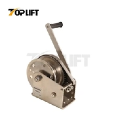
The primary function of a hoist is to lift and lower loads vertically. This is the most basic yet vital role it plays in industrial operations. By using a hoist, heavy objects such as machinery, steel beams, or containers can be raised with control and lowered safely into place. However, hoists do much more than simply lift. They provide the precision needed to position materials exactly where they are required, which is critical in assembly work and installation processes.
Some hoists, such as lever hoists, also allow operators to pull or tension loads horizontally, making them useful for adjusting heavy objects or securing items in place. In addition, hoists incorporate safety features such as braking systems that hold loads securely, preventing sudden drops. By replacing manual lifting with mechanical or powered systems, hoists reduce physical strain on workers and minimize the risk of injuries, making them essential not just for efficiency but also for workplace safety.
Lifting hoists are found in almost every major industrial sector. In construction, they are used to raise steel beams, move concrete panels, and handle scaffolding or prefabricated sections of buildings. Portable hoists make it easier to move smaller loads across different levels of a site, ensuring smooth workflow and faster progress.
In manufacturing, hoists are integral to assembly lines and maintenance. They are employed to move machine parts, lift engines, or handle molds with accuracy. Electric chain hoists, in particular, are widely used in factories where repetitive lifting tasks require both speed and reliability. Warehousing and logistics facilities also rely on hoists to stack, load, and unload goods, allowing operators to handle bulky items that would otherwise be difficult to move.
In the mining sector, hoists play a role in lifting drilling equipment, ores, and even large mining machinery. The same is true in the oil and gas industry, where air-powered or explosion-proof hoists provide safe handling in hazardous environments. Shipping and port operations depend heavily on wire rope hoists, which have the capacity to manage heavy cargo containers and ship components. The automotive industry uses hoists on production lines to lift engines and transmissions into place. Energy industries, including wind power and hydroelectric plants, use hoists to position heavy turbines, generators, and other components during installation and maintenance.
Selecting the right hoist requires an understanding of several factors. The first is load capacity, since the hoist must be able to safely handle the heaviest loads expected in the operation. It is always better to select a hoist with a working load limit that exceeds the maximum weight to be lifted. The height of lift also matters, as the hoist must reach the necessary distance to move materials effectively.
The choice of power source is another key factor. Manual hoists may be sufficient for light or occasional lifting, while electric or hydraulic models are more suitable for heavy, frequent operations. The working environment also influences the decision. For example, explosive or corrosive conditions call for explosion-proof or corrosion-resistant hoists, while confined spaces may require low-headroom designs. The frequency of use determines the durability required, and portability may be necessary for jobs that involve moving equipment across sites. In all cases, the compatibility of the hoist with existing rigging systems, as well as compliance with safety standards, must be considered.
No matter the type of hoist, safety is always the top priority. Regular inspections of chains, ropes, brakes, and gears are necessary to detect signs of wear or damage. Operators should never exceed the rated load limit, as overloading is one of the most common causes of accidents. Proper training is essential so that workers understand how to use the equipment correctly and respond to emergency situations. Environments with special risks, such as explosive atmospheres, require the use of suitable hoists that are designed to prevent hazards. By following safety protocols, companies can ensure that hoists not only improve efficiency but also protect workers and equipment.
The advantages of lifting hoists are numerous. They allow for faster and more efficient handling of materials, reduce workplace injuries by minimizing manual lifting, and offer versatility across many industries. They also protect equipment and products by providing controlled handling, which reduces the risk of damage. Precision is another important benefit, as hoists can position heavy items with great accuracy, which is often essential in assembly and installation work. In the long run, the use of hoists contributes to cost savings by improving productivity, preventing accidents, and reducing downtime caused by equipment failure or worker injury.
As technology continues to advance, lifting hoists are evolving with it. Modern hoists are increasingly equipped with smart technology such as sensors that monitor load stress and wear, providing real-time data to operators and maintenance teams. Remote operation through wireless controls is becoming more common, allowing workers to operate hoists from safe distances. Advances in materials are leading to lighter yet stronger chains and ropes, improving both portability and lifting capacity. Environmental considerations are also influencing design, with energy-efficient motors and environmentally friendly hydraulic fluids becoming standard features. These innovations are shaping the future of lifting hoists, making them safer, more efficient, and more sustainable.
Lifting hoists are at the heart of modern industry, providing a reliable means to lift, lower, and position heavy loads with precision and safety. From manual chain blocks used on small job sites to massive hydraulic hoists handling extreme loads, these devices serve an essential role in keeping operations efficient and workers safe. Choosing the right hoist involves considering load requirements, environment, power source, and safety standards, but the rewards are significant in terms of productivity, durability, and reduced risk.
As industries grow more demanding, the need for trustworthy lifting solutions becomes greater. Companies that invest in high-quality hoists not only improve their operations but also protect their workforce. For businesses looking for dependable and advanced lifting hoists, Hangzhou Top Lift Industries Co., Ltd. offers a wide range of products built to meet the highest standards, making them a trusted partner for lifting solutions worldwide.